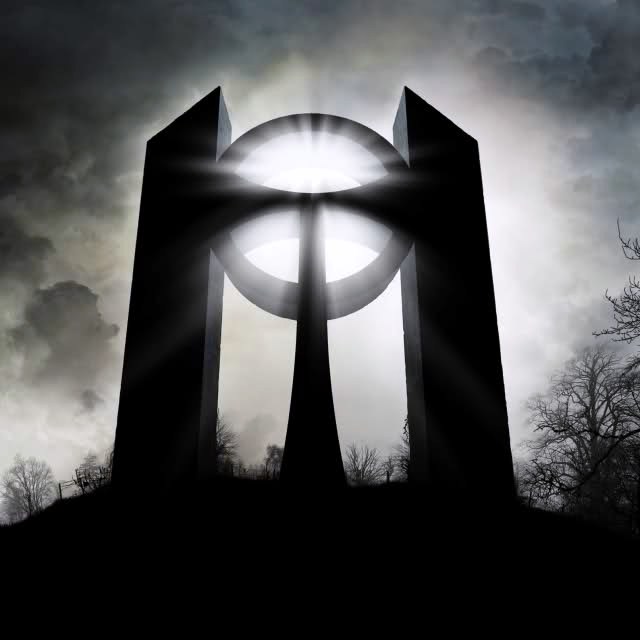
When I first heard the news that Amebix was returning, I was honestly excited. Some may find this unnecessary—and that’s understandable. I hadn’t listened to the Redux EP either, and from what I heard, the feedback wasn’t exactly encouraging. Then came the news of a new full-length album, and soon after, the release of “Knights of the Black Sun.” That track gave me some hope. It lacked some of the core elements that originally made Amebix who they were, but it was still a solid song—at times even reminding me of Darkest Hour.
Then the album cover was revealed. Honestly, it’s a terrible cover—let’s not skip over that. But we held on to hope that the content would redeem it. So I gave the album a proper listen. And the result? Here's what I think.
First off, if you didn’t enjoy “Knights of the Black Sun,” you’re probably not going to like the album either. And if your expectations are built on old Amebix, I’d advise you to skip it altogether. Let Amebix stay how you remember them. That being said, I don’t think the album is bad—but it might have been better received had it not been released under the Amebix name. There are experimental parts, which Amebix always had to an extent, but here they’re more pronounced. The entire album feels like new territory for the band: a modern sound, double-kick-heavy drumming reminiscent of Hypocrisy, melancholic and progressive moments that recall Porcupine Tree, and metal/rock riffing that’s more polished than gritty.
To be clear, none of this is poorly executed—it just doesn’t quite fit the Amebix legacy. Still, the dark and angry undertone remains. You’ll also hear post-punk elements reminiscent of Killing Joke and Joy Division—a longtime presence in Amebix's sound. One thing that works surprisingly well is the seamless transitions between songs, giving the album the feel of a single continuous piece, a technique familiar from progressive/psychedelic acts.
There’s hardly any crust punk left here. This is more metal, more modern, more experimental. You’ll hear scattered samples: speeches, laughter, operatic vocals, phone rings, even an Islamic call to prayer. The bass—a signature element of Amebix—is still present and effective, even if less dominant. Synths are used tastefully and not overdone. The guitar work, though arguably off-brand for Amebix, is solid. What really put me off, however, are the drums. I can live with the guitars, but the drum work here just doesn’t work for me. Good drumming could have elevated this album a lot more.
Now, about the tracks: I genuinely liked the opener “Days”—it has that Porcupine Tree vibe I mentioned earlier. “The Messenger” and “God of the Grain” are angry and, despite their sterile sheen, have powerful riffs that draw you in if you’re willing to give them the chance. “Sonic Mass Part I & II” are among my favorites—the first half is acoustic and slow, while the second plunges you into a bleak, apocalyptic atmosphere with unsettling (but well-written) repetitive riffs. On the flip side, “Here Comes the Wolf” doesn’t work at all—it sounds like something from a generic Scandinavian metal band. “The One” is a perfect example of the Killing Joke influence that’s been in Amebix since day one. And the closing track “Knights of the Black Sun”—as I mentioned above—is a strong and successful song.
To sum it up: this is an album with some truly weird and even “WTF?” moments—things that really don’t suit Amebix at all. The modern production and polished sound can be a turnoff for some. But despite everything, if you're into the bands I referenced and you’re open to new ideas—especially if you go into it without expecting classic Amebix—you may find yourself appreciating what Sonic Mass offers. Because objectively, it’s not a bad album. It’s not Amebix, but it’s not bad either.
Objective rating: 7/10
As a fan: 5/10