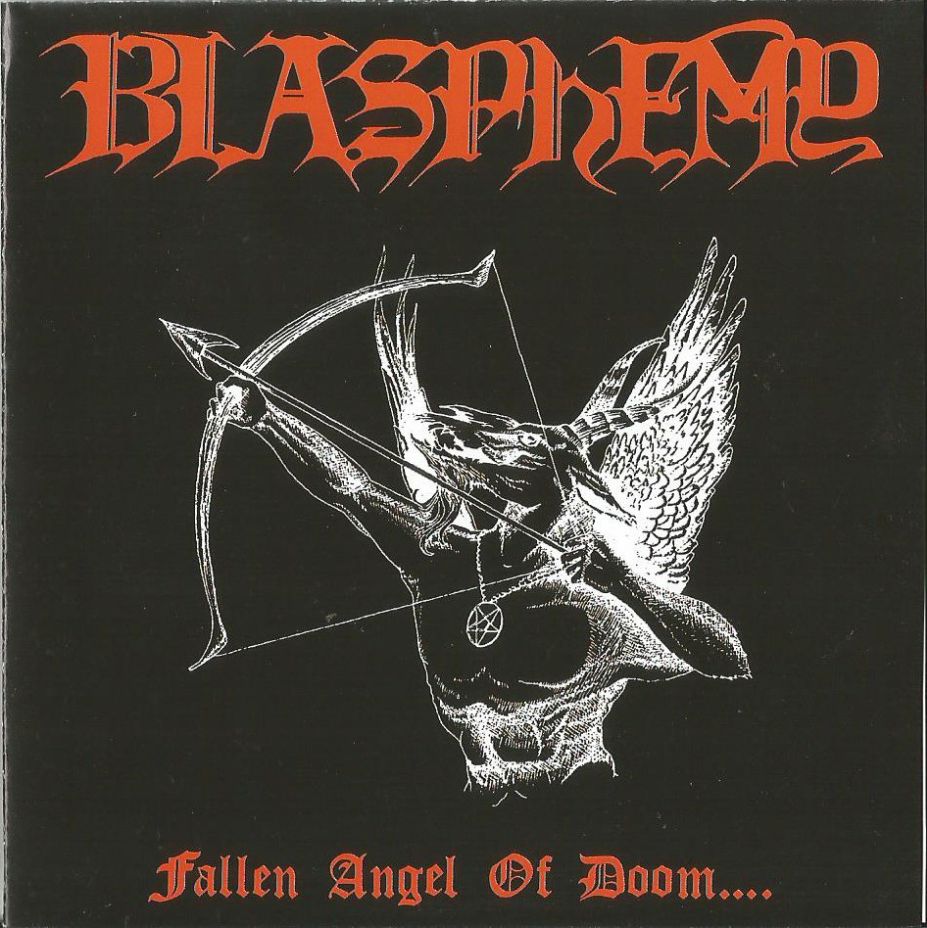
When Sodom unleashed the track “Blasphemer” back in 1984, little did anyone know it would inspire a band’s very name. That same year, three childhood friends from Canada formed Blasphemy, channeling their war, death, and satanism ideologies into a hateful, destructive, and dark sound. From the depths of evil messages, this trio delivered the masterpiece Fallen Angel Of Doom in 1990.
Containing elements of Thrash and some Death Metal, this Old School Black Metal classic is pure devastation — raw, unpolished, and void of melody or technicality. They flat out reject finesse or intricate musicianship! Inspired by bands like Sodom, Bathory, Possessed, and Carcass, their sound closely resembles the second wave Black Metal acts such as Von and Beherit. Their music spits pure hatred and sick chaos, sending out messages of panic and fear against humanity.
Tracklist:
Winds Of The Black Gods (Intro)
Fallen Angel Of Doom
Hoarding Of Evil Vengeance
Darkness Prevails
Desecration
Ritual
Weltering In Blood
Demoniac
Goddess Of Perversity
The Desolate One/Outro
You can’t help but marvel at how raw and threatening this sound is. Blasphemy doesn’t just play music — they wage war with it, unleashing pure violence fueled by revenge. Fallen Angel Of Doom is an ideal album for anyone wanting to witness the flawless filth of Black and Thrash metal combined. Released by Wild Rags and now a genre classic, its production is admittedly weak, yet this actually complements the music perfectly.
The wicked, chaotic guitar riffs create an eerie and ominous atmosphere while the bass sometimes emerges aggressively. At times, the guitars lean fully into Thrash territory, with simple-patterned drums that unleash a barrage of fire. When distortion on drums and guitars reaches its peak, the music descends into a maddening chaos. Short, savage solos add a balancing touch to the chaos.
Vocally, it’s less singing and more the echo of satanic howls, voices drenched in hatred that ignite the music and stir a disjointed state of mind. Nocturnal Grave Desecrator’s shifting vocals range from Possessed-level growls to tones reminiscent of early Sodom or Hellhammer, occasionally touching on the rawness of Bathory or early Carcass-like grindcore.
The eerie intro, “Winds of The Black Gods,” with its rising and falling wails, plants ideas of war and chaos in your mind before Blasphemy’s assault truly begins. The title track “Fallen Angel Of Doom” is pure musical terror — a symbol of hatred — with grindcore influences dominating the vocals. Early on, the drums, guitars, and bass attack in chaotic fashion, while the closing solo remains brief and understated.
“Hoarding Of Evil Vengeance” starts and choruses in a more regular rhythm before suddenly intensifying; the instruments often clash so much that the drums sometimes retreat into the background and other times hammer home like nails. Structurally, it somewhat recalls Possessed. The track abruptly ends, followed by sinister growls and demonic whispers that lead into another Blasphemy rampage, “Darkness Prevails.” As the title suggests, darkness reigns supreme here, with unrelenting violence and hatred ruling the song, which closes with a ripping solo.
“Desecration” bursts out with a scream full of hatred, spreading sin and joining forces with Satan’s armies to attack churches and proclaim his victory. The instruments weave a tense chaos reminiscent of infernal fire, with scratching solos slicing through the transitions.
With “Ritual,” the satanic hordes begin their ceremonies, executing their victims amid thunderous, primitive drumming. Like the others, it’s a classic Blasphemy track. “Weltering In Blood” leaves enemies drowning in blood, while “Demoniac” presents a slightly different vibe with deeper, more resonant instruments.
Before “Goddess Of Perversity,” a horrifying intro links two songs, seemingly illustrating infinite depravity. “Goddess Of Perversity” itself pushes everyone to corruption, with vocals shifting somewhat towards a Thrash-Black hybrid style. The drums become irregular and hard to discern during fast sections.
“The Desolate One” features even sadderistic vocals — behind the rasping growls, you can almost hear Satan’s roar. This track alternates rising and falling tempos, closing the album with a wicked “Outro” full of sinful despair.
As stated, don’t expect melodic finesse or technical prowess — that simply doesn’t suit a band like this, and no explanation is needed. While listening, you’ll catch traces of early Sodom and Carcass, a bit of Possessed’s Seven Churches, and some Bathory The Return vibes. Yet they also resemble bands like Von and Beherit who followed. Notably, “War Command” from their next album Gods Of War was later covered with respect by Beherit.
In the late 1980s, the Virginia-based Thrash-Speed metal band At War was described as “War Metal,” a label later applied to Blasphemy as well. In every aspect, Blasphemy truly deserves the title of Satan’s soldiers. As one of the key pillars of Black Metal’s second wave, their legacy remains undisputed.